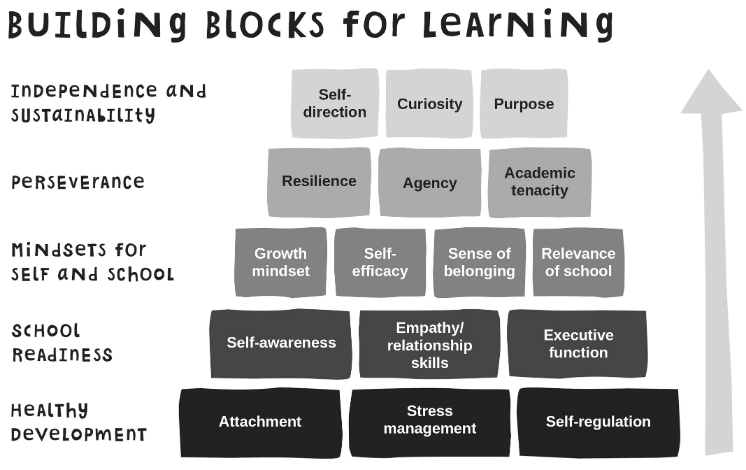
BUILDING BLOCKS FOR LEARNING
PREPARED
What Kids Need for a Fulfilled Life
by Diane Tavenner
Scroll down to continue.
REAL-WORLD AND PROJECT-BASED LEARNING
Seek out opportunities to engage your child’s opinion and participation
Many parents feel it’s their job to oversee and correct homework, but their role in their child’s learning can go so much further. Kids can take on projects like mapping out transportation options to school, helping figure out a plan to deal with the weird noise the car is making, or researching which cleaning products are the most healthy and safe to use around kids and pets. We don’t usually engage kids in these kinds of activities, in part because it’s faster and easier not to, and in part because we think they don’t care. But remember what my student James told me when he was practicing his speech on farm subsidies: “Just because we’re young doesn’t mean we don’t care about things.”
SELF-DIRECTION
Make the self-directed cycle part of your everyday life
Even if your child’s school does not teach a self-directed cycle, there’s no reason you can’t teach it and support it at home: They can set a goal, make a plan, carry out the plan, show what they know, and reflect. This cycle can be used for anything a child wants to pursue, from cooking dinner one night a week to making a case for the activity your family will do next weekend.
SELF-DIRECTION
Teach the five power behaviors of a self-directed learner
1. Strategy-shifting
2. Challenge-seeking
3. Persistence
4. Responding to setbacks
5. Appropriate help-seeking
These are ideas you likely parent to anyway, but having a common language and framework to put them in can be helpful. You can call these behaviors out when you see them in your child, and ask your child to point them out in others.
SELF-DIRECTION
Emphasize effective goal-setting
The earlier you start this with your children the better. Every child is capable of setting goals and it’s a process that is invaluable to them as they grow into school and adulthood. Introduce your child to SMART goals: Goals that are Specific, Measurable, Actionable, Realistic, and Timebound. The goals they set should matter to them so that their motivation is internal, not external. They can think big and set large, aspirational goals (and practice how to achieve them), but they should also set smaller, simpler goals—particularly when they’re younger. Help them by talking through their plan to reach those goals, what potential obstacles might arise, and how they might get past those obstacles. Check in with them regularly to offer help.
SELF-DIRECTION
Remember that skill development is lumpy
Don’t get discouraged. Failure is part of the deal. Remember the quote of the stonecutter—sometimes it takes a long time before you can see the impact of your efforts.
Catch yourself when you need to be needed by your child
Let the discomfort wash over you. This slow letting go is part of the greater process of preparing your child. Be willing to be needed differently.
REFLECTION THROUGH MENTORING
Mentor; don’t direct
Just as I had to learn not to step in and take over when Rett began cooking, take a step back. Give feedback and guidance without giving answers. Ask questions that help your child reflect on what they want, who they are, what they care about, how they feel, and, ultimately, what they should do as a result. This isn’t about you telling them what to do but about them making authentic choices for themselves.
REFLECTION THROUGH MENTORING
Focus on the “ings”
Instead of asking, “What do you want to be?”, ask questions that get to underlying interests. Ask questions like: “What do you like doing?” “What parts of that do you like most?” Help your child figure out that they like creating, or talking, performing, or problem-solving; “ings” that will go far toward helping them better know themselves.
REFLECTION THROUGH MENTORING
Asking the right questions
When your child inevitably has an interpersonal conflict, see it as an opportunity to teach the skills needed to mediate conflict, repair relationships, collaborate, and reflect. There are a set of questions Summit mentors use all the time that are also helpful when parenting. They are open-ended questions that most often lead to thoughtful answers.
What do you want from this situation? What emotions do you have? What behaviors are you exhibiting? What is working or not working? Why? Put yourself in the other person’s shoes: What do you think their perspective is? What role can you play in getting to your desired outcome? Is there anything you need to do to make the relationship right?
COLLABORATION
Teach the principles of consensus
With STP, when your family reaches an impasse, practice first turning the problem into a question. Then, identify the status by clearly communicating with each other, without judgment, why each person feels the way they do. Define the target—the marks that will be checked off if you’ve reached a resolution. Finally, if the decision grid allows, develop proposals to get there.
SUCCESSFUL HABITS
Ask why, then ask why again
If you are in conflict with your child about anything from bedtime to homework, approach the conflict with curiosity. In my case, I employed this style of questioning with Rett when, to my mind, he never did his homework, and I ended up learning a lot not only about the way his brain works but also about what he was really being asked to do. Ask why of yourself, too. Why is it so important to you that something happen in a certain way? So often we go along with rules “just because” but when you ask why, they often don’t make a lot of sense. This might be an opportunity for advocacy.
A CONCRETE NEXT STEP
Reframe the college search
When looking at colleges, encourage your child to look at schools not for their football team or familiarity but to ask if the school is:
A CONCRETE NEXT STEP
Encourage Plan B thinking
Even if they get into their first-choice school and pursue what they most want, thinking through and exploring other options will help them have a more flexible approach to their future; one that’s more grounded in who they are than what rigid path might be available at the moment.
BUILDING BLOCKS FOR LEARNING
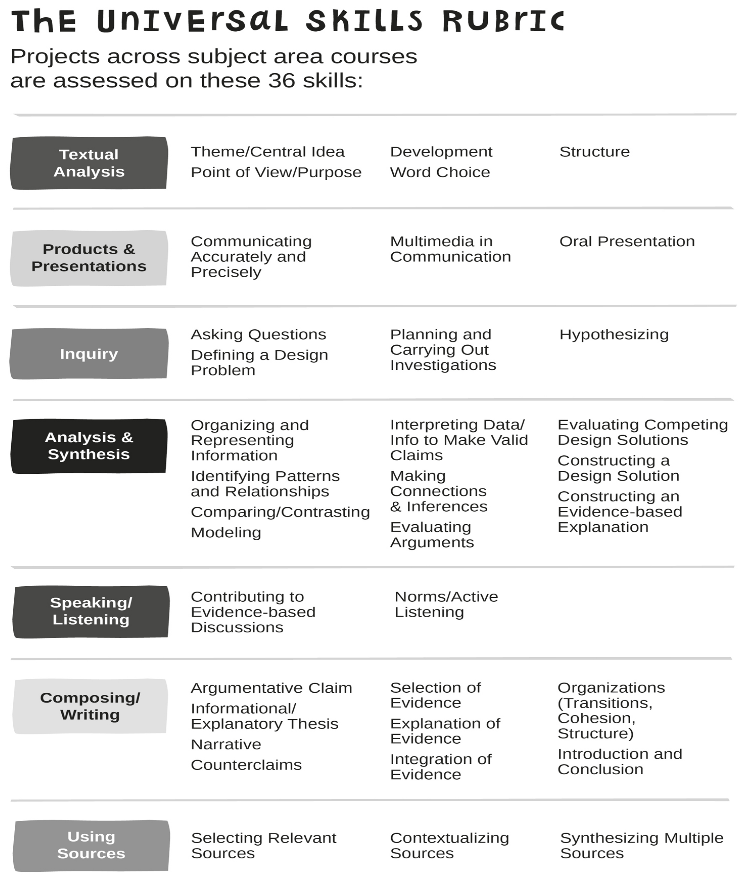
THE UNIVERSAL SKILLS RUBRIC
Thank you
for your attention!
Stack is made by Mike Bostock
and is available on GitHub
under the BSD license.